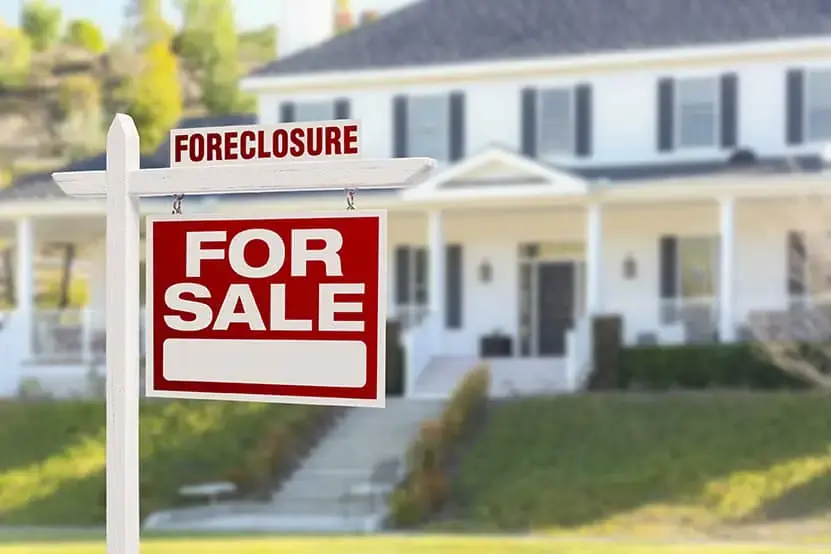
How to Stop a Home Foreclosure
In this guide, we list the methods that homeowners in financial distress can use to stop foreclosure fast.


Last updated

Key Takeaways
- Contact your lender as soon as you know a payment will be late or missed.
- Get any agreement in writing and have it reviewed by an attorney or HUD-approved counselor.
- Workout options include loan modification, repayment plans, reinstatement and forbearance.
- Bankruptcy halts foreclosure immediately but is temporary and often only delays it.
- Selling before foreclosure keeps it off your credit history and may preserve some equity.
Anytime a homeowner runs into financial trouble dire consequences can enter into the equation. That is especially true when it comes to foreclosure of the home that was used to secure the debt owed to the lender who is now foreclosing to get title to the property back.
However, there are several methods that homeowners in financial distress can use to stop foreclosure fast. Some methods require money, while others require agreement to forgo money by the lender or through the court system.
Here’s 5 steps to take that can help stop the foreclosure process dead in its tracks:
Step 1: Don’t Panic
Most households have a surprising array of assets that can be used to make payments and delay foreclosure. Unemployment insurance, disability insurance and savings are each potential cash sources. Household budgets can be slashed. Big, expensive cars can be traded in for cash. Retirement funds are often available — but be aware that withdrawals may result in penalties and additional income taxes.
Step 2: Late and Missed Payments – Contact the Lender
If problems cannot be delayed or deferred, and if mortgage payments will be late or unpaid, then you MUST contact the lender as soon as possible.
Once the due date for your mortgage payment has come and gone, it’s only a matter of time before your lender knows you’re in default. But don’t wait for them to contact you; act preemptively and call them right away. If you leave it up to them, they may not end up contacting you for several months – when it will be much harder to resolve the situation.
When you contact the lender, simply let them know your situation and ask what (if any) suggestions they have. Lenders deal with defaulted customers every day, so they often can provide solid advice. And most lenders aren’t eager to expend the money and time it takes to foreclose on a defaulted homeowner, so they’re open to other alternatives.
Don’t be afraid to communicate with your lender. If an agreement is made with them, stick to it.
If you reach an agreement with the lender, make sure they provide it in writing so that you’re protected if they don’t live up to their end of the agreement. And don’t rely solely on the lender to act in your best interest. Before you sign anything, have it reviewed by a real estate attorney or local housing counseling agency approved by the U. S. Department of Housing and Urban Development. Visit www.hud.gov or call 800.569.4287 to find a local HUD-approved housing counseling agency.
Know the Deadlines
If you default on your loan and don’t work out a plan of resolution with your lender, the lender will take the necessary steps to schedule a public foreclosure auction of your property. In some states the countdown to the auction is less than a month; in other states it is more than a year. In either case it’s critical that you understand exactly how much time you have before you lose your home. A tangible deadline will help you set goals and take control of the situation.
“As an investor, the most common mistake I see people make is to wait until it is too late,” says T.J. Marrs, a national real estate author, speaker and success coach. “The closer the auction, the fewer the options.”
Although most states require that the foreclosing lender rigorously attempt to notify the owner of any public foreclosure sale, you shouldn’t rely solely on them to do that. When you contact the lender, ask them if and when a public foreclosure sale has been scheduled and up to what date you can stop the sale. Also ask them what you need to do to stop the sale.

The public foreclosure sale is the ultimate deadline, but there are other deadlines incorporated into the foreclosure process that are important. In states with foreclosure proceedings conducted through the courts, homeowners may be asked to appear in court during the pre-foreclosure process. At those court proceedings, a judge will decide if and when a public foreclosure sale will occur.
If you haven’t been able to work out an agreement with the lender beforehand, it’s crucial that you and an attorney are present at any court proceedings so that you’re aware of what is happening and can represent your interests to the court.
At this point your goal is to help the lender create a “workout” agreement that effectively modifies your mortgage so that the foreclosure can be stopped before going to completion.
Step 3: Look at Workout Options
Once you enter into discussions with a lender or a “servicer” — the company that services the loan for an investor — any number of options are open. While lenders are typically NOT required to modify loan arrangements, many will. The usual choices include:
Loan Modification: “This option should be considered when the borrower experiences difficulty making regular mortgage payments as a result of a permanent or long-term financial hardship,” says Liz Urquhart with AIG United Guaranty, a leading private mortgage insurance company. “Reducing an above-market interest rate to a market rate and/or by extending the original terms of the note may enable the borrower to continue making payments. Permanent interest rate reductions appeal most to borrowers, but even a temporary rate reduction of one to three years can provide substantial help.”
Repayment plans: Say you must miss a payment and that each payment is $1,000. With a repayment plan you might pay $1,075 a month until the missing money is repaid.
Reinstatement: Imagine you missed two or three monthly payments. With a reinstatement, or what is also known as a “temporary indulgence,” you bring your loan current, pay late fees and other costs, and the loan continues as before.
VA Refunding. If you have a loan backed by the Department of Veterans Affairs, the VA may buy the loan from your lender and take over the servicing. If you have the ability to make mortgage payments, but your loan holder has decided it cannot extend further forbearance or a repayment plan, you may qualify for refunding, according to the VA.
FHA loans: If you financed with a loan guaranteed by the Federal Housing Administration, call 1-800-569-4287 or 1-800-877-8339 (TDD) to reach a HUD-approved housing counseling agency for assistance and advice.
Forbearance: One of the most overlooked foreclosure options a borrower has is forbearance. Forbearance is the postponement for a limited time of a portion or all of the payments on a loan in jeopardy of foreclosure. Partial or full payment waivers had their origins in the Great Depression. A lender expects that during the moratorium period the borrower can solve the problems be securing a new job, selling the property or finding some other acceptable solution.
Depending on your lender, you may be able to restructure your loan. For example, delinquent mortgage payments may be added to the backend of the borrower’s scheduled payments or the borrower could be given more time to bring the late payment current. Some mortgage companies are able to arrange a repayment plan based on your current financial situation. You may qualify for this option if you recently lost your job. Call your lender and inquire if you meet the requirements for forbearance.
Private mortgage insurers. Mortgage insurance companies typically require lenders to begin foreclosure proceedings once a delinquency reaches 150 days or when a sixth missed payment is due. However, such requirements may be waived in areas impacted by natural disasters and for other reasons.
Claim advance: If you bought with less than 20 percent down then either the loan is self-insured by the lender or you have private mortgage insurance (PMI). In some cases PMI companies will provide a cash advance to bring the loan current — money which is sometimes interest free and need not be repaid for several years.
Disasters: Most lenders, but not all, will provide substantial relief in the face of hurricanes, earthquakes and other terrible events. Typical measures include a suspension of late fees, no late payment reports to credit bureaus, a pause in foreclosure actions and modified payment schedules. To get such benefits you must contact the lender as soon as possible after the disaster.
Re-amortization: In this case your missed payment is added to the loan balance. This brings your account current. However, says Saccacio, “since your debt has increased, future monthly payments may be larger unless the lender agrees to lengthen the loan term.”
Deed in Lieu : For homeowners who have no opportunity to reinstate, redeem or even sell their property and just want out of the property, a deed-in-lieu of foreclosure may be viable option. Essentially, a deed-in-lieu of foreclosure is a transfer of title from a borrower to the lender, which the lender accepts as full satisfaction of the mortgage debt. With this option, you as a borrower voluntarily “give back” your property to the mortgage company. You won’t save the house, but you do avoid the trauma of foreclosure and reduce the negative impact on your credit.
Short sale: An arrangement where the lender accepts less than the mortgage debt in satisfaction for the entire loan amount. Also called a “compromise agreement” with VA loans. Be cautious: Saccacio says in some instances money not repaid may be regarded as taxable income. Also, lenders in some cases may sue to recover any shortfall.
Bankruptcy: When all other options are exhausted many homeowners consider bankruptcy as a last resort to save their home. Unfortunately, in most cases bankruptcy only delays the inevitable; in the worst case it can actually speedup the process.
Filing bankruptcy is not a permanent cure for foreclosure, but it can temporarily halt the foreclosure process. Once a borrower in default files a petition for bankruptcy, foreclosure proceedings stop immediately. A homeowner, however, must hire an attorney in order to file bankruptcy, which can be expensive. Before considering this option, a homeowner should consult a real estate attorney.
Learn more about foreclosure and bankruptcy.
Step 4: Refinance the Loan
Since 2001 millions of loans with new formats have been issued, permitting low monthly payments for the first several years of the loan term and then much higher monthly payments thereafter.
If you have a loan where soaring payments are a certainty, don’t wait to refinance. Do it now while you have a strong credit profile and no missed payments.
Step 5: Sell the Property

In some situations there is no workout or refinancing option which can save a property. If a job is lost, medical payments are overwhelming, or mortgage payments are rising to the point of bankruptcy the only plausible choice may be to sell the property.
If the situation is getting worse every month, you have to protect your interests and sell the property. This is a hard choice but if you sell before foreclosure you will get a better price for the property and preserve your credit standing.
Most importantly, remember that there still are options, but you have to act quickly. Also, never rule out seeking out foreclosure assistance
Officials and lawmakers at all levels of government recognize that a healthy housing market is essential to a growing economy. Keeping homeowners in their homes, paying their mortgages every month is important to maintain a healthy housing market. To attain that goal, the government at the federal and state level is offering assistance to help distressed homeowners prevent foreclosure when they need help for foreclosure.
Do not respond with inaction
“When people go into default, their first option is to do whatever is necessary stop the default early in the process,” said Marrs, “Most home sellers procrastinate and fail to take action early.”
Selling your home probably isn’t your first choice, but if you’re not able to stop the public foreclosure auction any other way, it’s a choice you should make as long as you don’t owe more than what the property will sell for on the market. By selling pre-foreclosure, you’ll be able to keep the foreclosure off your credit history and walk away with some money to show for your equity.
“If you let things get too far behind, it will cost more in terms of higher interest rates and negative credit ratings than what you might be saving by holding on to bad deal,” Marrs said.
Inform your lender that you are listing the property for sale to pay off the amount owed to them. Ask the lender if they will postpone the foreclosure sale to give you enough time to sell the property for a reasonable price. Even if the sale is postponed, you’ll probably be under a time crunch to sell the property. That’s why it’s important to make this decision early on in the process.
“If the auction date is getting very close, one may consider selling to an investor who can quickly close and clear up the primary problems, or hire a realtor if they can demonstrate they can sell quickly,” Marrs said, adding that some investors may allow homeowners to continue to live in the property and lease it after the property is sold.
“One may consider working with a reputable investor, whereby they purchase property, then lease property back to you with an option to buy,” he said. “Work out whatever equity split arrangement seems appropriate.”
Marrs cautioned homeowners to carefully review any such arrangements to ensure they are getting a fair amount of the equity and that they are relinquished from any liability for their mortgage debt. If so, this arrangement can be beneficial for the homeowner.
“Remember it is better to have half of something than zero of nothing. If it goes to the auction, you could end up with nothing plus the poor credit to live with for the next 10 years,” Marrs said.
If you decide to sell your home on your own, market it well to get the best price possible. Thanks to the increased use of the Internet by consumers looking for a home, you can gain a lot of exposure by listing your property online. Sellers will soon be able to post a property on RealtyTrac, the fourth-largest real estate website with more than 2 million monthly visitors.
Balance your budget
The core issue forcing homeowners into default is a lack of cash available to pay the mortgage. There are two ways to obtain more cash for the mortgage payment: spend less in other areas or find a way to increase monthly income. Even if you think you’ve already considered and pursued these options, it’s important to take an honest and disciplined look at your budget to double check for any areas of improvement.
Because money is so tight, most homeowners in default aren’t living lavishly or spending money frivolously. But you should go beyond that and carefully document your family’s everyday spending over the course of a week or two. You may find additional areas that can be cut. In addition, make a list of all your monthly bills and prioritize them. If some of the bills on that list are for luxury products or services, you should seriously consider discontinuing them.

“Look at other assets which could be liquidated to keep the mortgage payments current. Late mortgage payments will negatively affect credit more than just about anything,” Marrs said. “Let your car payments go behind before the mortgage is left unpaid.”
On the flip side, look at alternative sources of income. Many people fall into default on their mortgage due to the loss of a job. If you’re capable of working, consider finding a temporary job or two – even if you’re overqualified and the jobs don’t pay well – to cover some of your expenses while you’re looking for long-term, higher paying employment.
You could also look for a short-term source of income, such as a credit card, friend or relative to pay back payments and fees. But do this only if you have a good chance to pay that borrowed money back quickly and you’re in a position to stay up-to-date on your mortgage payments going forward, according to Marrs.
“I’m not suggesting rob Peter to pay Paul. Only do this if the reason which caused one to get behind has been essentially rectified,” he said. “For example, the homeowner lost a job a few months back and is now back to work, but is too far behind to catch up all at once.”
Government Programs to Prevent Foreclosure
Officials and lawmakers at all levels of government recognize that a healthy housing market is essential to a growing economy. Keeping homeowners in their homes, paying their mortgages every month is important to maintain a healthy housing market. To attain that goal, the government at the federal and state level is offering assistance to help distressed homeowners prevent foreclosure when they need help for foreclosure.
Below you will find some further helpful information on how you may be able to avoid foreclosure.
Helpful Resources
Please note: These sites are not RealtyTrac Web sites. All information and content on these sites are the responsibility of the owner of the sites. We are only posting this information if you are seeking help for foreclosure.
Frequently Asked Questions
What should I do if I miss mortgage payments?
Contact your lender immediately, stay in your home, and contact a HUD-approved housing counseling agency, whose services are usually free.
What alternatives to foreclosure are available?
Options include special forbearance, mortgage modification, a HUD partial claim, a pre-foreclosure sale and, as a last resort, a deed in lieu of foreclosure.
What information should I have ready for my lender?
A brief explanation of your circumstances, recent income documents and a list of household expenses.
How can I avoid foreclosure scams?
Don't sign papers you don't fully understand, get all promises in writing, and check with a lawyer or your mortgage company before any deal involving your home.
Sources & References
Outside sources cited in this article.
- Housing Counseling, U.S. Department of Housing and Urban Development
- Find a housing counselor, Consumer Financial Protection Bureau
- How long will it take before I'll face foreclosure if I can't make my mortgage payments?, Consumer Financial Protection Bureau
- Trouble Making Payments, U.S. Department of Veterans Affairs
- www.hud.gov, hud.gov
- makinghomeaffordable.gov
- fanniemae.com
- freddiemac.com
- hopenow.com

About the author: Manuel Martinez
RealtyTrac contributor
Manuel Martinez is a contributor to RealtyTrac who writes about local housing markets, home buying and real estate investing. He has written for RealtyTrac since 2013, covering city and state market reports, home buying guides and tips, investment financing and strategies for buying and flipping homes.
More in Listing Type
Member Features
Find Real Estate Bargain!
Full foreclosure details
Home value, equity and ownership info
Find homes priced below market
Get full access with a FREE Account
Already a member?