Real Estate’s Inventory Shortage – It Ain’t Going Away
Home values have been soaring, powered in large measure by a visible and persistent lack of inventory. If you’re a property owner or real estate investor, the inventory shortage is no different from low mortgage rates or all-cash buyers — it’s a good thing. What makes the lack of inventory especially interesting is that it’s […]

Key Takeaways
- NAR inventory figures exclude for-sale-by-owner homes, about 8% of the market in 2020.
- A four-to-six month inventory supply is usually considered best for local markets.
- RealtyTrac counts 1.4 million vacant zombie homes, 1.4% of the housing stock.
- The typical existing home sold for $341,600 in April, up 19.1% in a year.
- Labor shortages, rising material costs and strong demand limit new building.
Home values have been soaring, powered in large measure by a visible and persistent lack of inventory. If you’re a property owner or real estate investor, the inventory shortage is no different from low mortgage rates or all-cash buyers — it’s a good thing.
What makes the lack of inventory especially interesting is that it’s been going on for some time and seems unlikely to change in the coming year and perhaps much longer. It’s one reason for rising home prices but a downer if you’re a buyer.
What is inventory?
According to the National Association of Realtors (NAR), “when a seller lists a property, it becomes counted as inventory. When it goes under contract, it becomes a pending sale. Inventory is calculated monthly by taking a count of the number of active listings and pending sales on the last day of the month. If inventory is rising, there is less pressure for home prices to increase.”
The inventory figures supplied monthly by NAR are widely quoted but understate supply in two ways.
First, the inventory figures do not include homes made available for sale by owner (FSBO), homes that represented about 8% of the market in 2020. Without these homes, inventory estimates are undercounted nationwide.
Second, the 8% estimate reflects national numbers, in local markets the FSBO exclusion can be more significant.
“FSBO sales,” says NAR, “were highest in suburban/subdivisions at 31% and in urban areas or central cities at 30%, compared to only 3% in resort and recreation areas.”
Supply and demand
It’s usually said that a four-to-six month inventory supply is best for local real estate markets, but the definition of “best” is tricky. The goal of buyers and sellers is not balance, it’s to get the best possible deal. This reality reflects how inventory is viewed. The 2015 market in Washington, DC was ideal for buyers because six years of inventory were on hand. By 2018 the DC supply had shrunk below 2 months, a paradise for sellers.
Expanding supply
Given today’s inventory shortages, there surely must be a way to make more supply available. After all, if we can increase the supply of cars, shoes, and Teddy bears, why not houses? It turns out that the supply problem is complicated. That said, there might be a few ways to ease the inventory shortage
Zombie homes
There are 1.4 million Zombie homes nationwide according to RealtyTrac research. These are properties that for one reason or another are unoccupied and represent 1.4% of the housing stock.
If made available for sale, Zombie homes can more than double the April inventory level. However, this would be a one-time marketplace boost and not an ongoing solution to the inventory problem.
Foreclosures
As the moratoriums come to an end this year and at the start of 2022, the number of properties facing foreclosure will grow. Figures from RealtyTrac show that 223,671 properties were in the process of foreclosure during the second quarter.
“There’s a difference between homes facing foreclosure — properties with default notices, scheduled auctions, or bank repossessions — and homes actually sold at the end of the process on the courthouse steps,” said Rick Sharga, Executive Vice President with RealtyTrac, a leading source of real estate market trends data “A lot of properties might get a foreclosure notice, but with fast rising values and widespread bidding wars owners increasingly have the option to sell, pay off their debt, and walk away from closing — in some cases with big checks. A byproduct of such forced sales is more available inventory.”
New homes
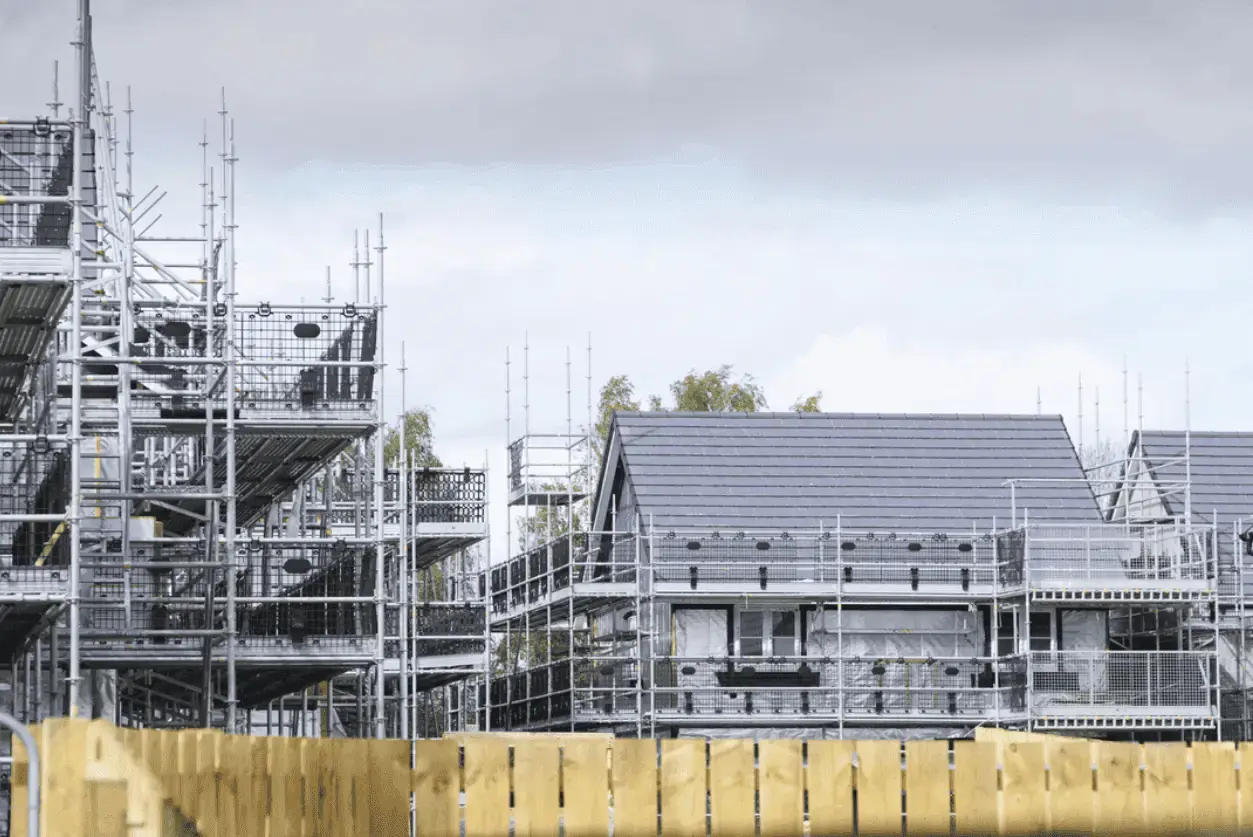
One way to end the inventory shortage is to build our way out of it. This seems logical but – in practice — it won’t happen.
Time. It takes a lot of time to complete new homes given land acquisition, permits, construction, marketing, financing, and closing. If builders somehow got started on 1 million new homes today, many would not be occupied until well into 2022.
Balance. You can’t have an inventory shortage without excess demand. The pool of potential buyers is enormous and won’t go away anytime soon.
For instance, according to the Pew Research Center, a majority of young adults — 26.6 million — continue to live with their parents. Pew estimates that 52% of young adults remain at home, a percentage higher than during the Great Depression!
Labor. Builders want to build, but their ability to erect new homes is constrained by a severe labor shortage. In April, there were 357,000 job openings in the construction industry. According to Robert Dietz, Chief Economist with the National Association of Home Builders, “this is higher than the 220,000 count recorded a year ago and is the highest level since May 2019.”
lost 20,000 jobs. Construction employment is still 225,000 below February 2020.”
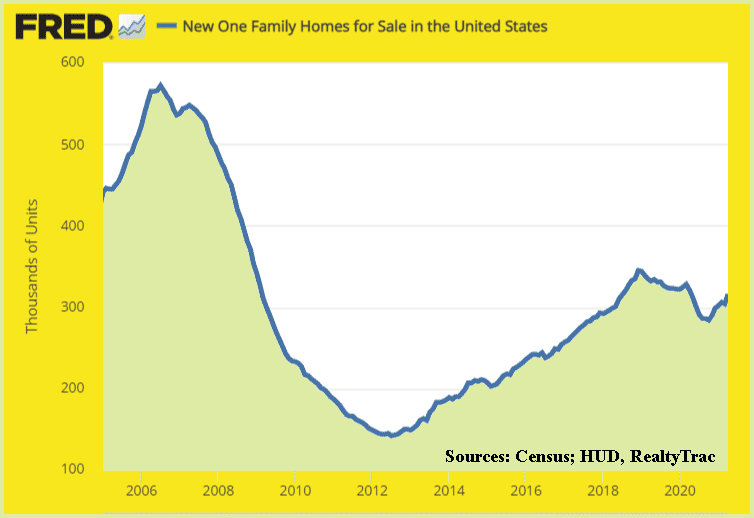
Pandemic pricing: Adding new homes to the existing stockpile is not cheap. NAR says the typical existing home sold for $341,600 in April, up 19.1% in a year and the 110th straight month of year-over-year gains. And new homes? They had a median price of $372,400 in April, a premium of almost $31,000. The higher cost is a substantial hurdle for many would-be buyers.
“From lumber to paint to concrete,” says Bloomberg, “the cost of almost every single item that goes into building a house in the U.S. is soaring. In some cases, the price increases have topped 100% since the pandemic began.”
Existing homes. The quickest way to pump-up inventories is to have more owners sell, but that’s not a feasible strategy. Owners know they can sell for a good price, but then they need to find a replacement property and that can mean a bidding war and big transaction expenses. An alternative strategy is to refinance at today’s rates and lower ownership costs or get a cash-out refinance. In either case, with refinancing there are no costs to market the property or to move.
Given these factors, it appears that the inventory shortage is going to be with us for a very long time. That’s a plus for property owners and a hurdle for buyers — especially first-timers. But, in today’s world, that’s reality.
Frequently Asked Questions
Why is there a housing inventory shortage?
Demand is large, new homes take time to build, builders face labor shortages and soaring material costs, and many owners choose to refinance rather than sell.
What is a balanced housing inventory?
A four-to-six month supply is usually considered best, though buyers and sellers each want the best deal rather than balance.
Sources & References
Outside sources cited in this article.
- A majority of young adults in the U.S. live with their parents for the first time since the Great Depression, Pew Research Center
- Job Openings and Labor Turnover - April 2021, U.S. Bureau of Labor Statistics
- RealtyTrac, attomdata.com
- Bloomberg, bloomberg.com

About the author: Manuel Martinez
RealtyTrac contributor
Manuel Martinez is a contributor to RealtyTrac who writes about local housing markets, home buying and real estate investing. He has written for RealtyTrac since 2013, covering city and state market reports, home buying guides and tips, investment financing and strategies for buying and flipping homes.
More in Home Buying
Member Features
Find Real Estate Bargain!
Full foreclosure details
Home value, equity and ownership info
Find homes priced below market
Get full access with a FREE Account
Already a member?